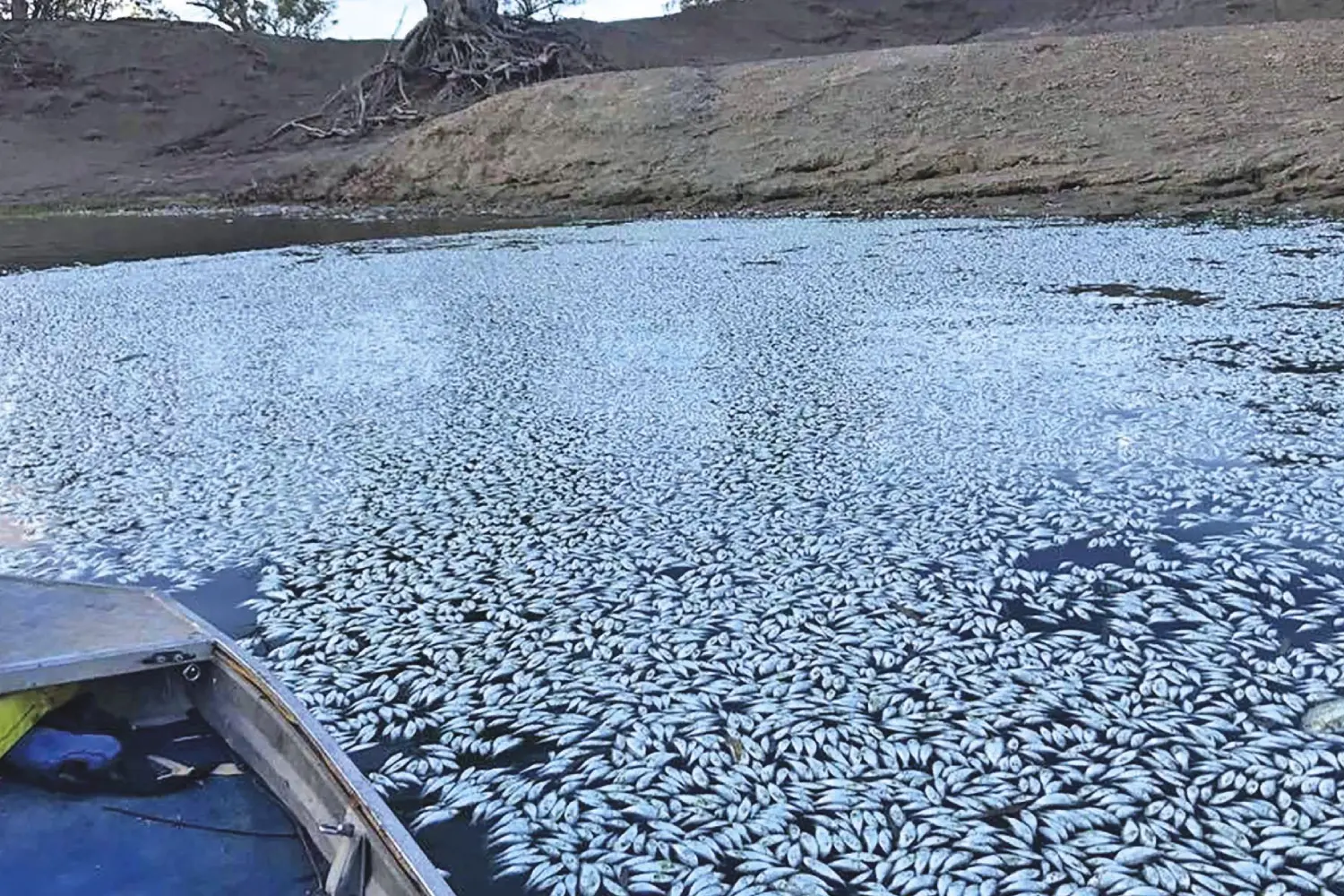
Stretches of the Darling River near Menindee have once again become the scene of ecological disaster, as millions of native fish carcasses floated to the surface following a sudden drop in dissolved oxygen levels. The event, which unfolded over a forty-eight-hour period, is among the most severe fish kills recorded in the basin and has reignited a fierce political and scientific debate about water management. Preliminary testing by the New South Wales Environment Protection Authority pointed to a combination of low inflows, high nutrient concentrations and a heatwave that rapidly warmed stagnant water, triggering an algal bloom that collapsed overnight and stripped oxygen from the water column. For local Barkandji people, the sight of sacred Murray cod and golden perch lining the banks was profoundly distressing, compounding grief over previous mass deaths in the same region.
Advertisement
State and federal officials scrambled to deploy aerators and release environmental water allocations in a bid to save remaining fish populations, but many scientists cautioned that these were short-term measures unable to address the structural decline of the river system. Water quality sensors showed that some sections of the river had effectively become dead zones, with oxygen saturations falling below one per cent. The scale of the kill overwhelmed clean-up crews, and residents reported an overwhelming stench that forced some families to temporarily leave their homes. Public health warnings were issued advising against contact with the water and consumption of fish from the affected area.
The root causes stretch back decades. Overallocation of water licences, combined with persistent drought conditions in the northern basin and reduced inflows from Queensland, has meant that the river’s flow is frequently insufficient to dilute nutrient runoff from agriculture. Blue-green algae, fed by excessive phosphorus and nitrogen, thrives under these conditions, creating a boom-and-bust cycle that can suffocate aquatic life when blooms die. Ecologists have warned that regular fish kills are a symptom of a system pushed beyond its resilience threshold, with implications not only for biodiversity but also for the towns and Indigenous communities whose cultural and economic lives are tied to the health of the river.