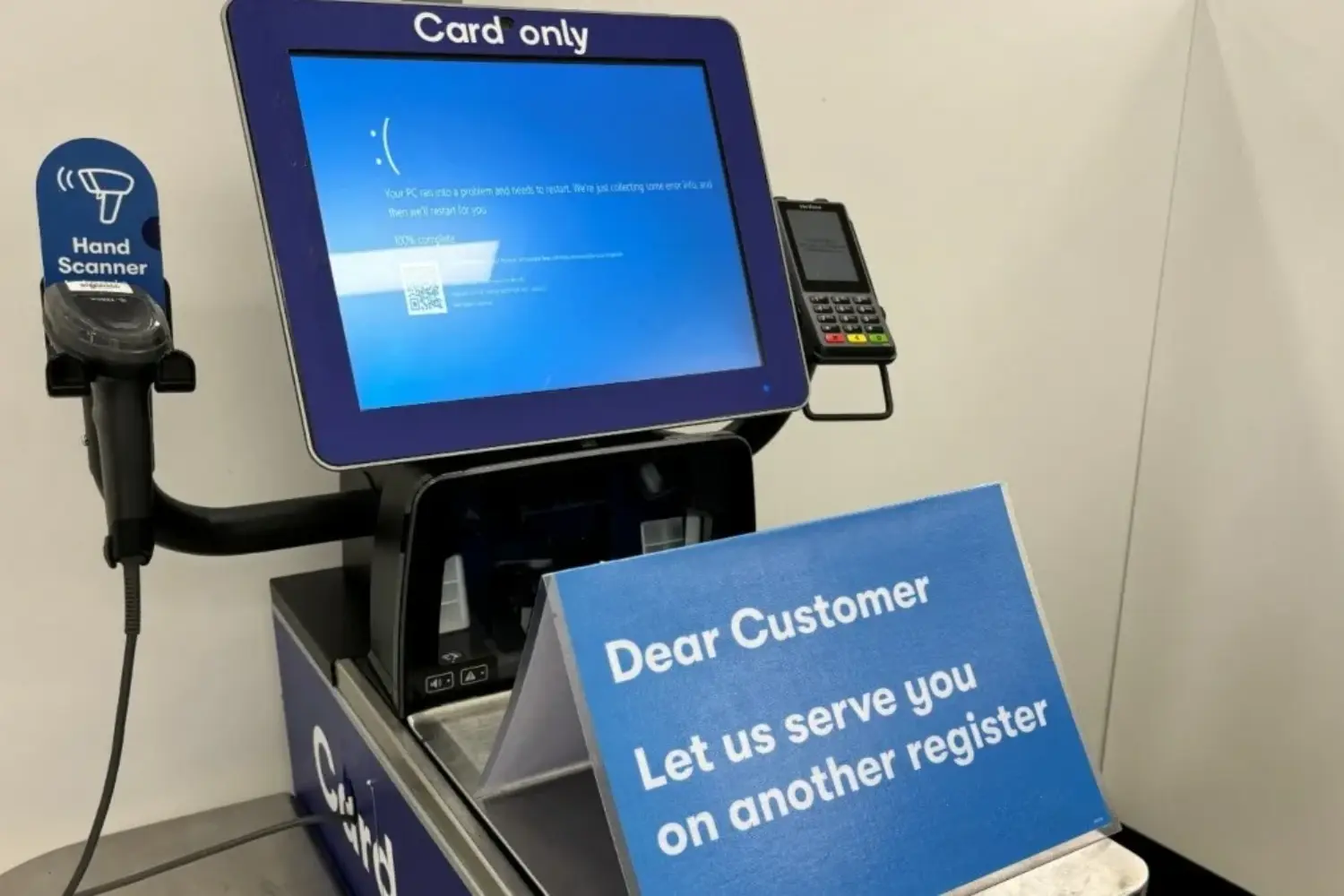
A cascading technology failure swept through Australia’s financial and travel sectors on a busy weekday morning, leaving millions unable to access bank accounts, complete payments or check in for flights. The root of the disruption was traced to a flawed software update pushed by a global cybersecurity provider that inadvertently conflicted with widely used cloud infrastructure. Systems across the big four banks, major airlines and retail payment networks went dark almost simultaneously, triggering chaotic scenes in shopping centres and airports. Customers at supermarket checkouts watched contactless payments fail repeatedly, while ATMs displayed error messages and banking apps remained frozen on loading screens.
Advertisement
The fallout at capital city airports was immediate and severe. Qantas and Virgin Australia grounded flights as check-in kiosks and baggage systems became inoperable, while Jetstar passengers queued for hours as ground staff resorted to manual processing. The outage exposed the deep dependency that critical infrastructure now has on a handful of technology platforms, raising urgent questions about systemic fragility. Airline chief executives issued apologies but stressed that the root cause lay outside their own networks, a defence that did little to soothe frustrated holidaymakers and business travellers facing indefinite delays.
Behind the scenes, crisis teams from affected corporations worked through the night with the software vendor to isolate the defective code and deploy a remediation patch. However, because the update had disabled the very systems needed to install a fix remotely, many servers required manual intervention by technicians physically present in data centres. This labour-intensive recovery process extended the outage far beyond what most contingency plans had anticipated. Cyber security experts noted that the incident was not a malicious attack but that it demonstrated an alarming single point of failure in global digital supply chains, a vulnerability that hostile actors could seek to exploit if left unaddressed.